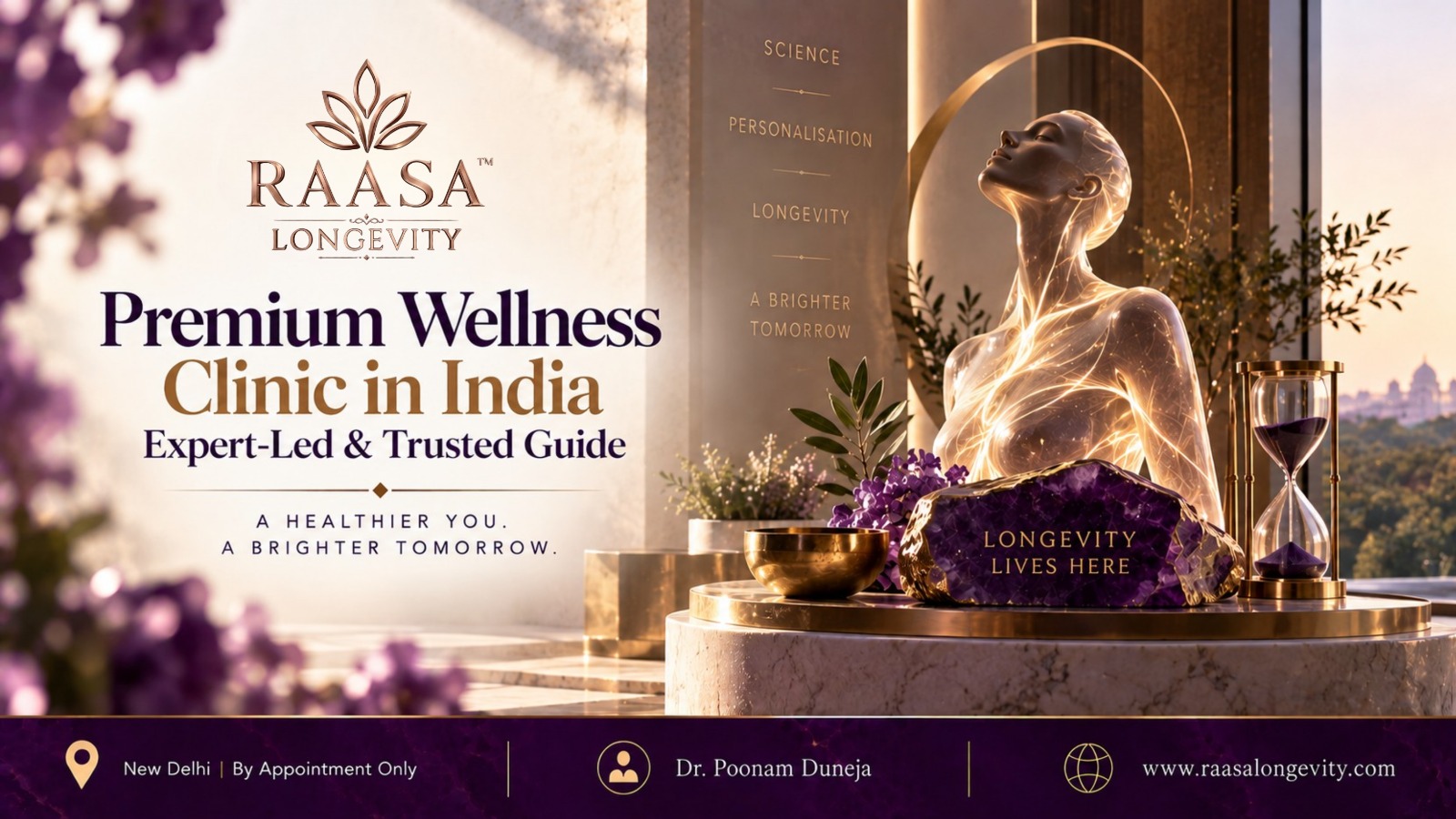
Wellness is no longer limited to spa treatments, short-term detox programmes or occasional health retreats. Modern wellness is increasingly about understanding the body, identifying lifestyle-related health risks and creating sustainable strategies that support physical, metabolic and mental wellbeing.
For individuals searching for a premium wellness clinic in India, the focus should extend beyond luxury. A truly comprehensive wellness programme should combine expert guidance, personalised assessments, functional nutrition, physical health, recovery and preventive strategies.
RAASA Longevity approaches wellness through an integrated, personalised model that brings together diagnostics, functional nutrition, metabolic health, gut health, physical performance, recovery and lifestyle optimisation. The objective is to understand the individual and create a health strategy aligned with their specific requirements and long-term goals.
India’s growing wellness landscape offers an increasing number of health retreats and wellness centres. However, choosing the right programme requires looking at the quality of professional expertise, personalisation, assessment methods, and the scientific basis behind the recommendations.
A premium wellness clinic is a health-focused environment that combines personalised wellbeing programmes with professional expertise and structured health optimisation.
Unlike a conventional spa or recreational wellness centre, a premium wellness clinic may take a more comprehensive view of the individual’s health.
Areas commonly considered within an integrated wellness programme include:
The purpose is not simply to provide a temporary feeling of relaxation. The goal is to help individuals develop sustainable habits and strategies that support long-term well-being.
Wellness recommendations are not universally applicable.
A dietary strategy that works well for one person may not be appropriate for another. The same applies to exercise, fasting, supplementation, sleep interventions, and recovery protocols.
Factors such as age, health history, lifestyle, nutritional requirements, physical activity and metabolic health can influence the appropriate approach.
This is why expert-led wellness programmes in India are increasingly focused on personalised assessment rather than generic recommendations.
Professional guidance can help individuals understand which interventions are appropriate, which may require modification, and which should only be considered under clinical supervision.
RAASA Longevity combines health assessment, functional nutrition, lifestyle optimisation and recovery strategies within an integrated wellness framework.
The approach is designed to move beyond temporary wellness experiences and towards sustainable improvements in health behaviour and overall wellbeing.
Effective wellness planning begins with understanding the individual.
Depending on the programme and individual requirements, relevant areas of assessment may include:
This information can help create a more individualised wellness strategy.
Nutrition is one of the foundations of long-term wellness.
At RAASA Longevity, functional nutrition under the guidance of Poonam Duneja focuses on personalised dietary strategies that consider an individual’s nutritional requirements, metabolic health, lifestyle and broader health objectives.
A personalised nutrition programme may focus on:
The emphasis is on building a realistic nutritional strategy rather than relying on restrictive diets or short-term detoxes.
Metabolic health is a major component of overall well-being.
Factors such as poor glucose regulation, excess visceral fat, physical inactivity, and inadequate sleep can influence metabolic health over time.
A personalised wellness programme can address relevant lifestyle factors through nutrition, physical activity, sleep and appropriate health monitoring.
The goal is to support healthier metabolic function while taking individual circumstances into account.
The gastrointestinal system plays an important role in digestion, nutrient absorption and immune regulation.
For this reason, gut health can form an important part of a comprehensive wellness strategy.
Personalised gut health planning may consider:
Rather than applying a universal gut-health protocol, personalised assessment can help determine which dietary strategies may be most suitable.
Wellness is not complete without physical health.
Maintaining strength, mobility, and cardiovascular fitness can contribute significantly to quality of life and functional independence.
A comprehensive wellness programme may therefore consider:
These factors are particularly important for people who want to maintain physical capability as they age.
Sleep is a fundamental component of well-being.
Adequate sleep supports cognitive function, mood, metabolic regulation, and physical recovery. Poor sleep can also make it more difficult to maintain healthy nutrition and exercise routines.
An expert-led wellness programme can therefore incorporate sleep hygiene, lifestyle adjustments and recovery strategies as part of an individual’s overall plan.
Modern lifestyles can expose individuals to sustained psychological and occupational stress.
Persistent stress may influence sleep, eating patterns, physical recovery and overall well-being.
A comprehensive wellness programme may incorporate:
The objective is to create practical strategies that can be incorporated into everyday life.
Premium wellness should be about more than the environment or facilities.
The quality of professional guidance, personalisation, and assessment should also be considered when evaluating a wellness programme.
| Feature | Conventional Wellness Centre | RAASA Longevity Approach |
| Primary Focus | General relaxation and well-being | Personalised health and wellness optimisation |
| Assessment | Basic wellness information | Personalised health and lifestyle assessment |
| Nutrition | Generic dietary advice | Functional and personalised nutrition |
| Metabolic Health | Limited focus | Integrated consideration |
| Gut Health | General dietary recommendations | Personalised gut health strategies |
| Fitness | General exercise | Physical performance and fitness focus |
| Recovery | Primarily relaxation | Sleep and recovery optimisation |
| Approach | Standardised | Individualised and expert-led |
| Long-Term Objective | Short-term wellness | Sustainable health and wellbeing |
RAASA Longevity combines premium wellness experiences with personalised health strategies.
Its framework brings together multiple dimensions of wellbeing rather than treating nutrition, fitness, recovery, and mental wellbeing as isolated areas.
The approach may be relevant for:
The focus is on helping individuals understand their health and build sustainable strategies around their personal requirements.
Poonam Duneja, Founder of RAASA Longevity, brings expertise in clinical nutrition, metabolic health and personalised wellness to the RAASA approach.
As a clinical dietitian and certified diabetes educator, her focus includes functional nutrition and personalised dietary strategies.
Nutrition can influence several dimensions of wellness, including energy, metabolic health, body composition, digestive health, and nutritional adequacy.
Integrating nutrition with broader lifestyle and health strategies allows wellness planning to become more individualised.
“Nutrition should fuel life, not just hunger.”
Poonam Duneja, Founder, RAASA Longevity
A premium wellness programme can be relevant to adults at different stages of life.
Long working hours, travel, and demanding schedules can make consistent nutrition, exercise, and recovery difficult.
High-performance environments can create challenges around sleep, stress, nutrition, and physical activity.
People who want to become more proactive about their health may benefit from structured assessments and personalised wellness planning.
Individuals who are unsure how to structure their diet around their lifestyle and health goals may benefit from professional nutritional guidance.
People who want to maintain muscle, fitness, mobility, and overall function can incorporate healthy-ageing principles into their wellness strategy.
Individuals experiencing demanding lifestyles may benefit from reviewing their sleep, physical activity, recovery, and stress-management habits.
Premium wellness programmes can provide guidance and structure, but everyday habits remain fundamental.
Build meals around nutrient-dense whole foods, adequate protein, vegetables, fibre and appropriate healthy fats.
Combine regular movement with resistance training and cardiovascular activity according to your abilities and professional guidance.
Maintain consistent sleep and wake times where possible and create a relaxing evening routine.
Adequate hydration supports normal physiological functions. Individual requirements vary according to factors such as climate, activity and health status.
Use sustainable techniques such as exercise, breathing practices, mindfulness, social connection and appropriate professional support.
A varied diet containing appropriate amounts of fibre can support digestive health.
Prioritising minimally processed foods can help improve overall dietary quality.
Regular health assessments can help identify relevant health concerns and provide an opportunity for timely professional guidance.
A premium wellness clinic provides personalised health and wellbeing programmes that may combine professional nutrition, health assessment, physical fitness, recovery, stress management and lifestyle optimisation.
A spa generally focuses on relaxation and personal care, whereas a premium wellness clinic may take a broader approach to health through professional guidance, personalised assessments, nutrition and lifestyle strategies.
Expert-led programmes can help ensure that health and nutrition recommendations are appropriate for individual circumstances. This can be particularly important when dietary changes, exercise modifications, or health interventions are involved.
Personalised wellness means developing recommendations around an individual’s health profile, lifestyle, nutritional requirements, physical activity, goals, and other relevant factors rather than applying the same programme to everyone.
Services can vary between clinics. A comprehensive programme may include functional nutrition, health assessments, metabolic wellness, gut health strategies, physical performance, sleep optimisation and stress-management support.
Functional nutrition focuses on individual nutritional requirements and how dietary patterns relate to areas such as metabolic health, digestion, nutrient adequacy, and lifestyle. The strategy should be tailored to the individual’s circumstances.
Metabolic health is connected with how the body regulates energy, glucose, and other physiological processes. Supporting healthy metabolic function can contribute to long-term well-being.
Yes. Gut health can be considered within an integrated wellness programme because digestion, nutrient utilisation and immune regulation are important aspects of overall health.
Energy can be influenced by many factors, including sleep, nutrition, physical activity, stress, and underlying health conditions. A personalised programme can help assess relevant lifestyle factors, but persistent fatigue should be discussed with a qualified healthcare professional.
Yes. Personalised wellness programmes can be particularly useful for busy professionals who need practical strategies around nutrition, exercise, sleep, stress and recovery.
Physical activity is generally an important component of well-being. A personalised programme may consider strength, cardiovascular fitness, mobility, exercise capacity and recovery.
Sleep is essential for cognitive function, mood, metabolic regulation, and physical recovery. Consistent, good-quality sleep is therefore an important foundation of wellness.
Persistent stress can influence sleep, eating behaviour, recovery, and overall quality of life. Sustainable stress-management strategies can therefore be an important part of a wellness plan.
No. Wellness programmes can also be used proactively by individuals who want to optimise lifestyle habits, understand their health profile, and support long-term wellbeing.
Healthy ageing involves maintaining physical function, metabolic health, cognitive wellbeing and independence. Nutrition, exercise, sleep, and preventive health can all contribute to these objectives.
RAASA Longevity combines premium wellness with a broader personalised health framework that incorporates functional nutrition, health assessment, metabolic health, gut health, physical performance and recovery.
Poonam Duneja is the Founder of RAASA Longevity and a clinical dietitian and certified diabetes educator. Her work includes functional nutrition, metabolic health and personalised wellness strategies.
RAASA’s approach includes functional nutrition and personalised dietary strategies as part of its broader wellness and longevity framework.
RAASA offers personalised wellness and longevity services that can be explored according to an individual’s location and programme requirements. The RAASA team can provide information about available options.
You can contact RAASA Longevity to enquire about its wellness programmes, assessments and personalised health optimisation services. The appropriate programme can depend on your health profile, lifestyle, and individual objectives.
Disclaimer: The information in this article is provided solely for educational, informational, and analytical purposes and is based on publicly available media interviews and reports. Metabolic needs, health conditions, and nutritional requirements vary significantly from person to person. Always consult a certified physician, registered dietitian, or qualified healthcare professional before making substantial changes to your diet, fasting habits, or exercise routine.