Skin health is increasingly being viewed as part of whole-body health rather than simply an aesthetic concern. Sleep, nutrition, metabolic health, stress, environmental exposure and the natural ageing process can all influence how skin looks and functions over time.
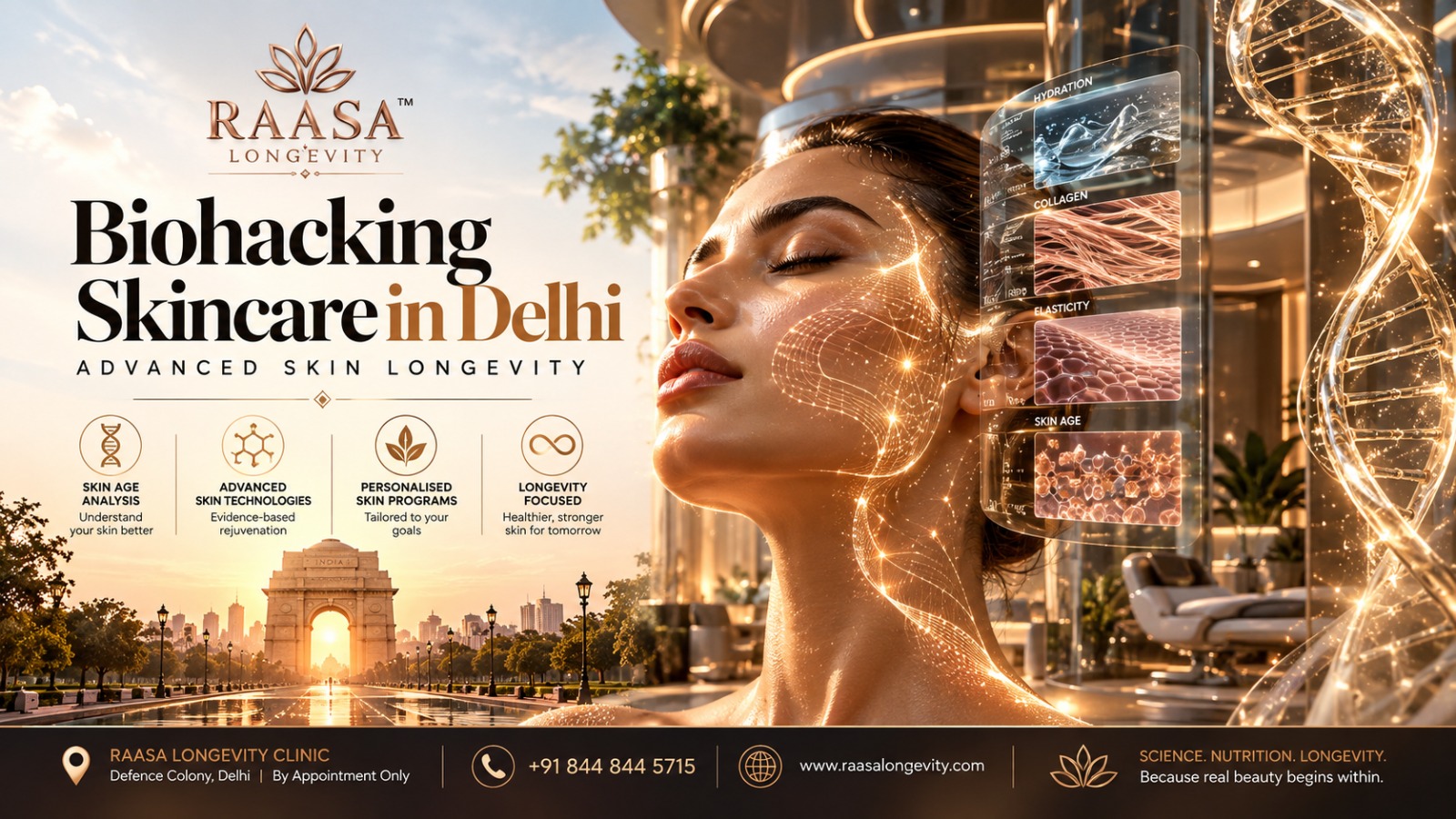
This has led to growing interest in biohacking skincare in Delhi, where technology, personalised wellness, nutrition and lifestyle strategies are combined to support skin health and healthy ageing.
Unlike a conventional skincare routine that may focus primarily on topical products, biohacking skincare takes a broader approach. It can involve understanding the individual’s skin, lifestyle and health profile and then selecting appropriate interventions around nutrition, recovery, sleep, light-based technologies and other wellness modalities.
However, biohacking skincare is a broad term rather than a single medical treatment. Different technologies have different mechanisms and evidence levels. A responsible approach should therefore distinguish between established skincare practices, professional aesthetic treatments and emerging wellness technologies.
Biohacking skincare broadly refers to using personalised lifestyle strategies, technology, nutrition and selected interventions to support skin health and healthy ageing.
Depending on the programme, this may include:
The objective is not necessarily to pursue a younger appearance at any cost. Instead, the emphasis can be on maintaining healthy skin function, supporting resilience and understanding the factors that influence skin ageing.
Skin longevity refers to maintaining the health, function and appearance of skin as it naturally ages.
Healthy skin ageing involves several biological and environmental factors, including:
Skin ageing is a natural process. A longevity-focused approach is therefore about supporting skin health over time rather than promising to stop ageing.
Photobiomodulation uses specific wavelengths of light and has been studied for various biological and dermatological applications.
Red and near-infrared light technologies are used in some wellness and skincare environments.
Potential applications depend on the wavelength, dose, device and intended outcome. Evidence should therefore be evaluated for the specific technology rather than applying broad claims to every red-light device.
A personalised programme may consider whether this type of technology is relevant to an individual’s goals.
Skin health is influenced by nutritional status.
A balanced diet can provide nutrients involved in normal skin structure and function.
A personalised nutrition strategy may consider:
The focus should be nutritional adequacy rather than excessive supplementation.
Sleep is an important component of whole-body wellbeing and recovery.
Poor or inconsistent sleep can affect how individuals perceive their skin and may influence lifestyle behaviours associated with skin health.
A skin-longevity strategy can therefore include:
Stress can affect behaviour, sleep and overall wellbeing, all of which can influence skincare routines.
A personalised wellness programme may incorporate stress-management strategies such as:
The objective is to support overall wellbeing rather than treat every skin concern as a stress-related condition.
Skin health does not exist in isolation from the rest of the body.
Metabolic health can influence broader health and lifestyle priorities. Nutrition, exercise, sleep and body composition can therefore form part of an integrated health optimisation strategy.
Recovery is relevant to both physical and overall wellbeing.
Sleep, nutrition, hydration and appropriate physical activity can contribute to recovery and healthy routines.
Advanced recovery technologies may be incorporated into premium wellness programmes where appropriate.
| Area | Conventional Skincare | Biohacking Skincare |
| Primary focus | Skin appearance and maintenance | Skin health plus broader optimisation |
| Topical products | Central | May be included |
| Nutrition | Often secondary | Can be integrated |
| Sleep | Usually separate | Can be part of the strategy |
| Recovery | Usually separate | Can be incorporated |
| Technology | Depends on provider | May include advanced wellness technologies |
| Diagnostics | Varies | May be incorporated |
| Personalisation | Varies | Typically central |
| Healthy ageing | May focus on visible ageing | Can focus on long-term skin health |
| Whole-body approach | Limited | More integrated |
The approaches can overlap. Biohacking skincare does not necessarily replace conventional dermatological or aesthetic care.
The terms rejuvenation and longevity are often used together but refer to different concepts.
Skin rejuvenation generally refers to approaches intended to improve visible characteristics such as texture, pigmentation or signs of ageing.
Skin longevity takes a longer-term perspective focused on maintaining skin health and supporting healthy ageing.
A comprehensive approach can consider both.
For example, an individual may use professional skincare or aesthetic treatments for a specific concern while simultaneously improving sleep, nutrition, sun protection and overall lifestyle.
High-pressure schedules can make consistent sleep, nutrition and skincare routines difficult.
A personalised programme can focus on practical changes that fit around work and travel.
Travel can disrupt:
A structured strategy can help maintain consistency during travel.
Frequent exercise can increase sweating, washing and environmental exposure.
Skin routines can therefore be adapted around training and recovery.
A longevity-oriented approach can combine skin protection with nutrition, sleep, exercise and broader preventive health.
RAASA Longevity takes a broader approach to healthy ageing by connecting nutrition, metabolic health, recovery, sleep and wellness technologies within a personalised longevity framework.
This whole-body approach can be relevant to skin longevity because skin health is influenced by multiple lifestyle and physiological factors.
RAASA’s published wellness ecosystem includes technologies such as red-light therapy, infrared-based technologies, recovery modalities and personalised functional nutrition.
The emphasis is on integrating wellness technologies with broader health optimisation rather than treating a single device as a universal skincare solution.
Technology can provide additional tools for a modern skin-longevity strategy.
Potential areas include:
Used in some wellness and aesthetic settings for specific skin-related applications.
May support broader recovery routines that contribute to overall wellbeing.
Wearables and other tools can provide information about sleep, activity and recovery.
Understanding dietary patterns can help identify areas where nutritional adequacy may need attention.
Relevant health information can help place skincare within a broader health optimisation programme.
The effectiveness of any technology depends on its specific design, application and evidence base.
If you are considering a biohacking skincare programme in Delhi, evaluate the programme as a whole.
Recommendations should reflect your skin, lifestyle and health objectives.
Ask what a particular device does and why it has been included.
Look for evidence relating to the specific technology and intended outcome.
Persistent or medically significant skin concerns require appropriate dermatological assessment.
Nutrition, sleep, sun protection and lifestyle remain important foundations of skin longevity.
More treatments do not automatically mean healthier skin.
The skin requires nutrients to support normal structure and function.
Important nutritional considerations can include:
However, more supplementation is not necessarily better.
Supplementation should be considered according to individual nutritional requirements and professional guidance, particularly when high doses or multiple products are involved.
“Skin health is connected to the health of the whole individual. Nutrition, sleep, metabolic health, recovery and environmental protection can all be relevant when developing a long-term strategy for healthy skin ageing.”
Poonam Duneja, Founder, RAASA Longevity
A whole-body perspective can help place skincare within a broader framework of preventive health and longevity.
A structured approach can follow several steps.
Consider skin type, lifestyle, nutrition, sleep, environmental exposure, and relevant health information.
Determine whether the priority is skin health, prevention, visible rejuvenation, recovery, or long-term healthy ageing.
Prioritise sun protection, nutrition, sleep, hydration and appropriate skincare.
Evaluate whether selected technologies are relevant and supported by appropriate evidence.
Observe how your skin responds rather than constantly changing multiple variables.
Persistent, changing or medically significant skin concerns should be evaluated by a dermatologist or other appropriately qualified healthcare professional.
The intersection between dermatology, aesthetics, wellness technology and longevity is likely to continue developing.
Emerging areas include:
As these areas develop, evidence quality and professional oversight will remain important.
The future of skin longevity is unlikely to depend on one technology alone. Instead, it is more likely to involve an integrated approach combining foundational health behaviours with appropriate technologies and personalised professional guidance.
For individuals researching biohacking skincare in Delhi, the most important consideration is the overall strategy rather than the number of technologies available.
Healthy skin ageing involves more than topical products. Nutrition, sleep, metabolic health, physical activity, stress, recovery and environmental protection can all form part of a broader skin-longevity strategy.
Advanced technologies such as red-light and other wellness modalities may complement these foundations when appropriately selected.
RAASA Longevity’s broader approach to personalised health optimisation brings together functional nutrition, metabolic wellness, recovery, sleep and advanced wellness technologies within a longevity-focused framework.
For individuals interested in skin longevity and personalised rejuvenation, this integrated approach can provide a broader perspective on maintaining healthy skin as part of whole-body wellbeing.
Biohacking skincare refers broadly to combining personalised skincare, nutrition, lifestyle strategies, health data and selected technologies to support skin health and healthy ageing.
Skin longevity refers to maintaining healthy skin structure, function and appearance as the skin naturally ages.
Conventional skincare often focuses primarily on topical products and visible skin concerns. Biohacking skincare may take a broader approach, incorporating nutrition, sleep, recovery, health data and technology.
Biohacking skincare includes a wide range of interventions with different levels of evidence. Established practices such as sun protection and balanced nutrition have stronger evidence, while some newer technologies require further research.
Red-light therapy is a form of photobiomodulation using specific wavelengths of light. It has been studied for several skin-related applications, although outcomes depend on the device, wavelength, dose and intended use.
Adequate nutrition is important for normal physiological function, including skin maintenance. Protein, essential fatty acids, vitamins, minerals and overall dietary quality can all be relevant.
Sleep is important for overall recovery and wellbeing. Maintaining adequate, consistent sleep can therefore form part of a broader skin-health strategy.
No single biohacking intervention can stop natural ageing. A broader strategy involving sun protection, nutrition, sleep, physical activity and appropriate skincare can support healthy skin ageing.
Advanced skin rejuvenation refers to professional or technology-assisted approaches intended to address visible skin characteristics such as texture, pigmentation or signs associated with ageing. Specific treatments should be selected according to individual needs.
Not necessarily. Skin type, medical history, medications, pregnancy, and existing skin conditions can affect suitability. Professional assessment may be appropriate before using advanced technologies.
No. Biohacking skincare should not replace dermatological diagnosis or treatment for medical skin conditions.
Ultraviolet radiation is a major environmental contributor to premature skin ageing. Consistent sun protection is therefore an important foundation of a skin-longevity strategy.
Stress can influence sleep, lifestyle behaviours and certain skin-related symptoms in some individuals. Persistent skin problems should still be assessed appropriately rather than automatically attributed to stress.
Adequate hydration supports normal physiological function. Topical moisturisers can also help support the skin barrier, depending on the individual’s skin type and product formulation.
Protein, essential fatty acids, vitamins, minerals, and other nutrients contribute to normal physiological processes involved in maintaining skin. Individual requirements vary.
Delhi has an expanding ecosystem of premium wellness, aesthetic and technology-assisted health services. Individuals should assess the qualifications, technologies, evidence and professional oversight of each provider.
Consider personalisation, professional expertise, technology selection, evidence, safety, skin assessment, nutritional guidance and how the programme integrates with broader healthy-ageing practices.
Red-light technology may be incorporated into some broader wellness programmes. Its suitability depends on the specific device, intended application and individual circumstances.
RAASA’s broader longevity approach incorporates functional nutrition, metabolic health, recovery, sleep and advanced wellness technologies. These areas can form part of a whole-body approach to healthy ageing and skin wellbeing.
An appropriate starting point is to understand your skin concerns, lifestyle, nutritional habits, and health objectives. Where necessary, dermatological assessment should be obtained before considering advanced interventions.
Disclaimer: The information in this article is provided solely for educational, informational, and analytical purposes and is based on publicly available media interviews and reports. Metabolic needs, health conditions, and nutritional requirements vary significantly from person to person. Always consult a certified physician, registered dietitian, or qualified healthcare professional before making substantial changes to your diet, fasting habits, or exercise routine.