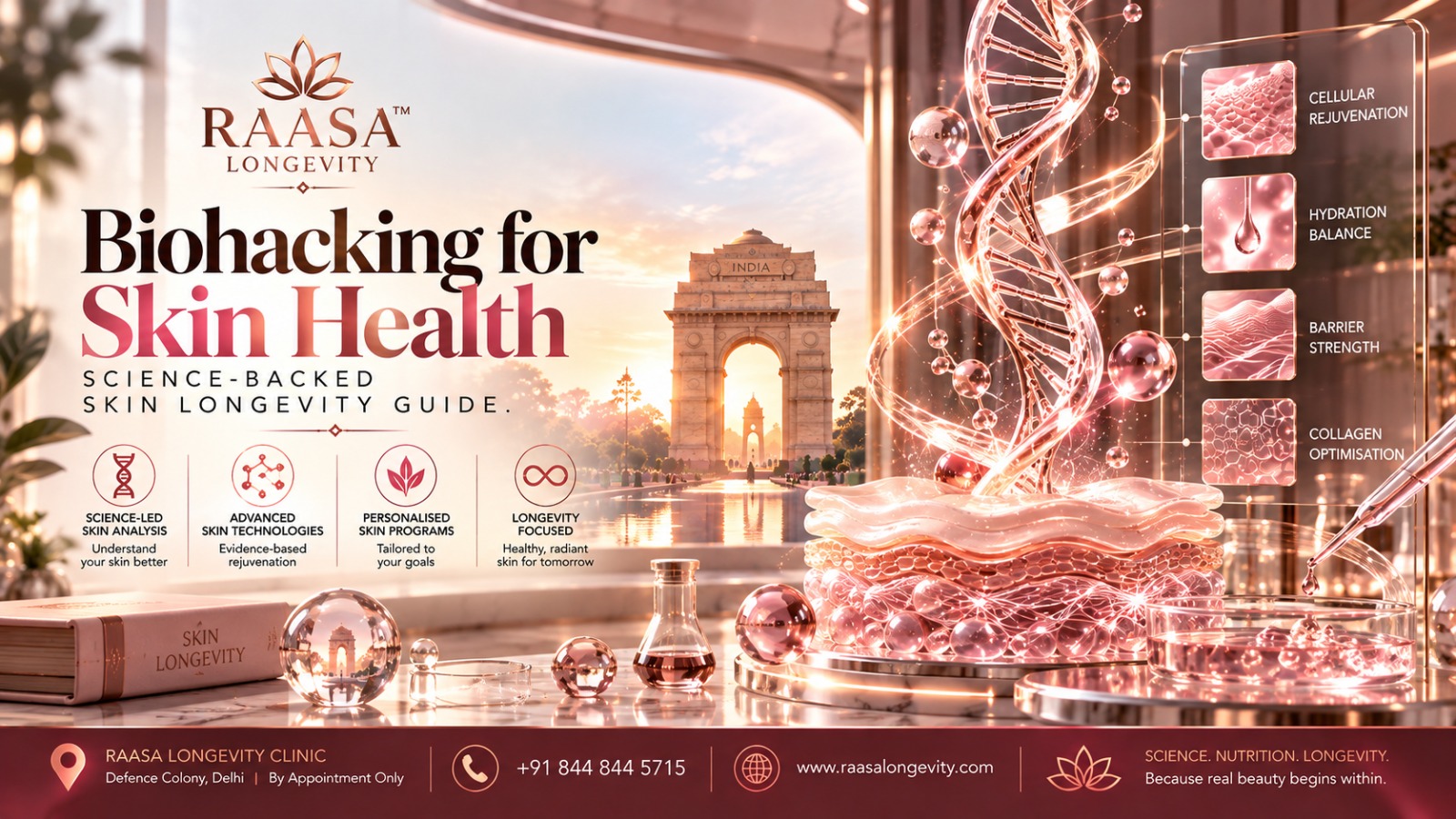
Healthy skin is influenced by far more than skincare products. Nutrition, sleep, ultraviolet exposure, physical activity, stress, environmental factors and the natural ageing process can all contribute to how skin looks and functions over time.
This has led to growing interest in biohacking for skin health, a broad approach that combines established healthy-lifestyle principles with selected technologies, measurements and personalised interventions.
However, not everything marketed as biohacking has the same level of scientific support. Some approaches, such as sun protection, adequate nutrition and healthy sleep, are well-established foundations of skin health. Other technologies, including certain light-based and recovery modalities, have more specific evidence and should be evaluated according to their intended use.
A science-backed approach to skin biohacking therefore focuses on understanding what is established, what is promising and what remains uncertain.
Biohacking for skin health refers broadly to using measurable information, lifestyle interventions, nutrition and selected technologies to support skin health and healthy ageing.
It can involve several interconnected areas:
The objective is not to stop natural ageing.
Instead, the focus is on supporting healthy skin function, protecting against avoidable damage and making lifestyle and skincare choices more personalised.
The answer depends on the specific intervention.
“Biohacking” is not a standard medical category. It encompasses a wide range of practices, from basic lifestyle habits to emerging technologies.
A useful way to evaluate skin biohacking is to divide interventions into three broad groups.
| Category | Examples | Evidence Consideration |
| Established foundations | Sun protection, adequate nutrition, sleep, avoiding smoking | Strong support for overall health and skin protection |
| Evidence-supported interventions | Certain topical ingredients and selected light-based applications | Evidence depends on the specific intervention and indication |
| Emerging technologies | New devices, protocols and experimental longevity approaches | Evidence may still be developing |
This distinction matters because an intervention being described as “advanced” does not automatically mean that it has stronger evidence.
Functional nutrition approaches nutrition through the context of the individual.
For skin health, this may involve considering:
The objective is not to create an unnecessarily restrictive diet.
Instead, a personalised approach can identify practical nutritional priorities that support overall health while fitting the individual’s lifestyle.
The relationship between the gastrointestinal system and skin is an active area of scientific research.
The gut microbiome interacts with the immune system and broader physiological processes, while diet and lifestyle can influence both gut and overall health.
However, claims about the “gut-skin axis” are sometimes presented more definitively than current evidence supports.
A sensible approach is to prioritise:
People with persistent gastrointestinal or dermatological symptoms should seek appropriate clinical assessment rather than assuming that a gut-focused supplement or protocol is the solution.
One of the technologies frequently associated with skin biohacking is photobiomodulation, commonly referred to as red-light therapy.
Photobiomodulation uses specific wavelengths of light and has been investigated for a range of applications.
Some studies have explored its potential role in areas such as skin appearance and tissue-related processes. However, outcomes depend on factors including:
This means results from one device or study should not automatically be applied to every red-light therapy product.
Before using a device, consider:
This helps separate evidence-informed use from marketing claims.
Beyond photobiomodulation, premium wellness environments may offer technologies associated with recovery and broader health optimisation.
These can include:
The relevance of these technologies to skin health varies.
For example, a recovery technology may support a person’s broader wellbeing without being a direct skin treatment.
This distinction is important when evaluating biohacking claims.
The skin barrier plays an important role in maintaining hydration and protecting against external irritants.
A compromised barrier can contribute to dryness, sensitivity and discomfort.
Basic barrier-supportive practices can include:
More products do not necessarily mean a healthier skin barrier.
The terms anti-ageing and skin longevity represent somewhat different philosophies.
Anti-ageing skincare often focuses on reducing visible signs associated with ageing.
Skin longevity takes a longer-term perspective.
| Anti-Ageing Approach | Skin Longevity Approach |
| Focuses on visible signs | Focuses on long-term skin health |
| Often product-led | Can be whole-body and lifestyle-led |
| Targets specific concerns | Considers multiple contributing factors |
| May focus on short-term appearance | Emphasises sustainable skin health |
| Often centred on topical care | Can combine skincare, nutrition, sleep and protection |
These approaches can overlap. Skin longevity does not mean avoiding professional aesthetic or dermatological treatments when appropriate.
Personalisation can make a skin-longevity strategy more practical.
An individualised assessment may consider:
Skin: Skin type, sensitivity and specific concerns.
Lifestyle: Sleep, exercise, work and travel.
Nutrition: Dietary patterns and nutritional adequacy.
Environment: Sun exposure and pollution.
Recovery: Sleep, stress and physical demands.
Goals: Prevention, maintenance or improvement of specific concerns.
This information can help determine which interventions are relevant and which are unnecessary.
RAASA Longevity takes a broader health and longevity perspective rather than viewing skin as an isolated concern.
Its published wellness framework incorporates areas such as functional nutrition, metabolic health, sleep optimisation, recovery, nervous-system regulation and selected advanced wellness technologies.
This whole-body model can be relevant to skin longevity because skin health exists within the broader context of nutrition, recovery, lifestyle and healthy ageing.
RAASA’s wellness ecosystem includes technologies such as red-light therapy and other recovery-oriented modalities, while its wider approach focuses on personalised health optimisation and longevity.
The objective is to integrate relevant interventions rather than treating a single technology as a universal answer for skin ageing.
A practical approach can begin with the fundamentals.
Advanced technologies can be considered separately according to individual requirements.
The biohacking industry can encourage excessive experimentation.
Be cautious about:
More intervention does not necessarily mean better skin.
“Skin longevity begins with the foundations of health. Nutrition, sleep, recovery, metabolic wellbeing and environmental protection can all contribute to a long-term strategy for maintaining healthy skin.”
Poonam Duneja, Founder, RAASA Longevity
A whole-body approach can help individuals move beyond short-term skincare trends and focus on sustainable health behaviours.
A comprehensive approach to skin health can be organised into six areas:
Protect: Reduce avoidable environmental damage, particularly UV exposure.
Nourish: Maintain nutritional adequacy and dietary diversity.
Recover: Prioritise sleep and appropriate recovery.
Move: Maintain regular physical activity.
Optimise: Consider relevant technologies and personalised interventions.
Monitor: Seek professional assessment when concerns arise and review appropriate changes over time.
This framework places advanced biohacking within the context of established health principles.
Skin health is likely to become increasingly connected with personalised health data and longevity science.
Emerging areas include:
However, innovation should be accompanied by evidence.
As new technologies emerge, consumers should ask not only whether something is new, but whether it has demonstrated value for the specific outcome being claimed.
Biohacking for skin health does not need to mean constantly experimenting with new devices, supplements or treatments.
A science-backed approach starts with the fundamentals: sun protection, adequate nutrition, sleep, physical activity, appropriate skincare and avoidance of harmful exposures.
From there, selected technologies may provide additional tools for individuals with specific goals.
The most useful approach is therefore not necessarily the most complicated one. It is the one that combines evidence, personalisation, consistency and appropriate professional guidance.
RAASA Longevity’s broader philosophy of personalised health optimisation provides a framework in which nutrition, metabolic health, recovery, sleep and advanced wellness technologies can be considered together as part of a long-term healthy-ageing strategy.
Biohacking for skin health refers broadly to using lifestyle strategies, nutrition, health data and selected technologies to support skin health and healthy ageing.
Some components of skin biohacking, such as sun protection, adequate nutrition, avoiding smoking and healthy lifestyle habits, have strong evidence. Other technologies have more specific or emerging evidence.
Skin longevity refers to maintaining healthy skin structure, function and appearance throughout the ageing process.
No. Natural ageing cannot be completely stopped. A healthy skin-longevity strategy aims to support skin health and reduce avoidable damage.
Adequate nutrition supports normal physiological function, including the maintenance of skin. Protein, essential fatty acids, vitamins, minerals, and overall dietary quality can all be relevant.
Red-light therapy, or photobiomodulation, uses specific wavelengths of light and has been studied for various skin-related applications. Outcomes depend on the device, parameters, and intended use.
Not necessarily. Individual skin conditions, medications and other factors can affect suitability. Appropriate professional guidance may be required.
Sleep is an important part of overall recovery and wellbeing. Consistent, sufficient sleep can therefore form part of a broader skin-health strategy.
Protein, essential fatty acids, vitamins, minerals and other nutrients contribute to normal physiological processes involved in skin maintenance. Individual requirements vary.
The gut and skin interact through immune, metabolic and other physiological pathways. Research into the gut-skin relationship is ongoing, and claims should be interpreted according to the strength of available evidence.
Stress can affect sleep, nutrition and other lifestyle behaviours and may influence some skin concerns in certain individuals. Persistent symptoms should be professionally assessed.
Yes. Appropriate protection from ultraviolet radiation is one of the most established foundations of a skin-longevity strategy.
Anti-ageing skincare often focuses on visible signs of ageing, while skin longevity takes a broader long-term view of skin health, protection and healthy ageing.
Regular physical activity supports overall cardiovascular and metabolic health and can form part of a broader healthy-ageing strategy. It should not be considered a standalone treatment for specific skin diseases.
No. Biohacking skincare does not replace dermatological diagnosis or treatment.
Depending on the provider, technologies may include photobiomodulation, red-light systems, infrared technologies, recovery systems, wearable tracking, and personalised health-monitoring tools.
No. Price does not establish effectiveness. Products and technologies should be evaluated according to their ingredients, specifications, intended use, and available evidence.
Supplements may be useful when an individual has a demonstrated nutritional requirement or deficiency, but unnecessary supplementation is not automatically beneficial. Professional guidance can help determine whether supplementation is appropriate.
RAASA’s broader longevity model integrates functional nutrition, metabolic wellness, sleep, recovery and selected advanced wellness technologies within a personalised health-optimisation framework.
Begin with the fundamentals of sun protection, balanced nutrition, appropriate skincare, sleep and physical activity. For persistent skin concerns or when considering advanced interventions, seek guidance from an appropriately qualified professional.
Disclaimer: The information in this article is provided solely for educational, informational, and analytical purposes and is based on publicly available media interviews and reports. Metabolic needs, health conditions, and nutritional requirements vary significantly from person to person. Always consult a certified physician, registered dietitian, or qualified healthcare professional before making substantial changes to your diet, fasting habits, or exercise routine.