
Recovery is becoming an increasingly important part of modern health optimisation. Whether the objective is maintaining physical performance, supporting recovery after demanding activity, or improving everyday movement and wellbeing, recovery can play an important role alongside nutrition, exercise, sleep, and preventive health.
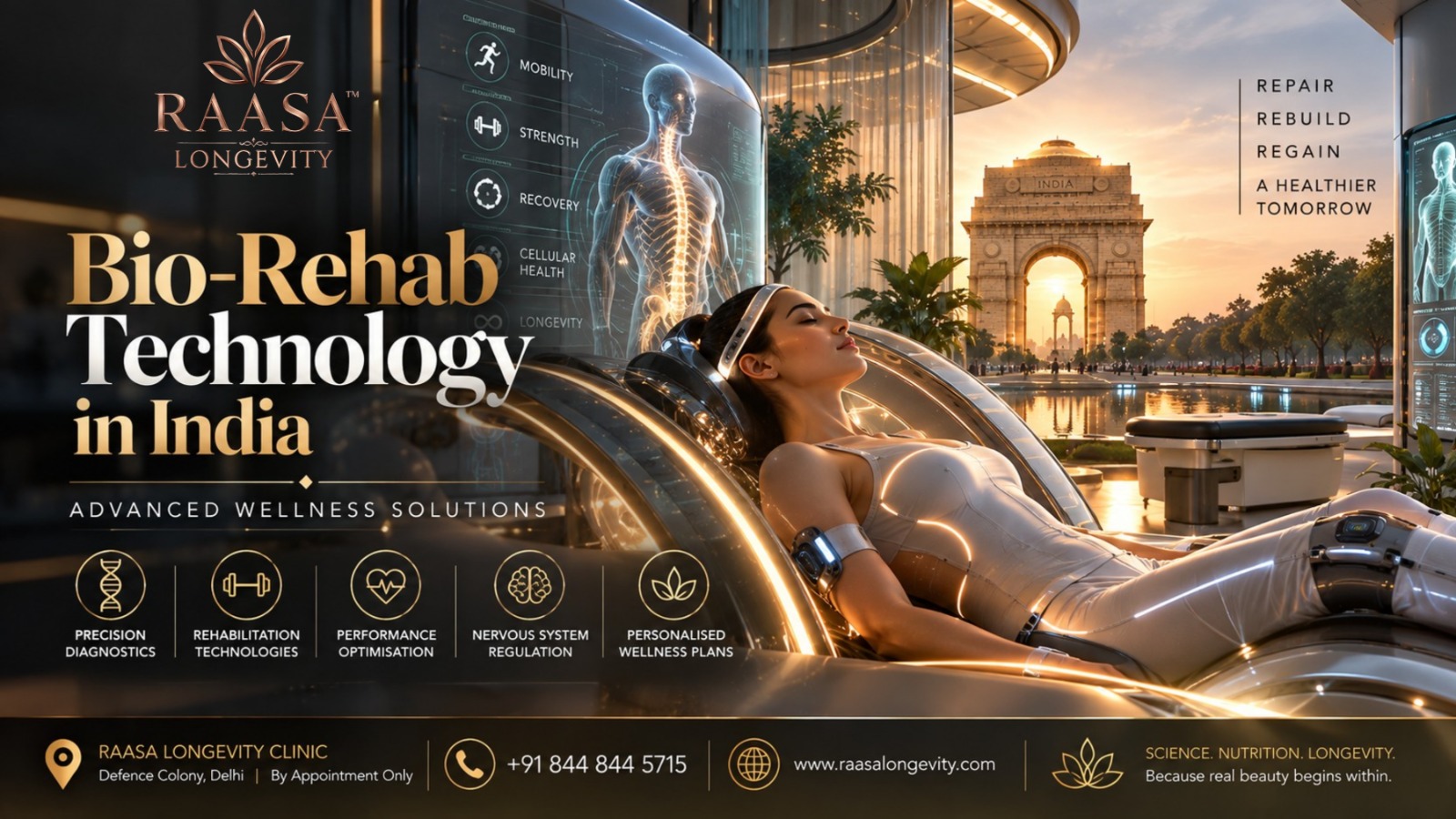
This has led to growing interest in bio-rehab technology in India, where advanced technologies are being incorporated into wellness, recovery, and performance-focused environments.
Bio-rehabilitation broadly refers to technology-supported approaches that may assist physical recovery, mobility, relaxation, performance and rehabilitation-related goals. The technologies used can range from light-based systems and electromagnetic technologies to compression, movement-focused equipment, recovery environments and data-led monitoring.
However, bio-rehab technology should not be confused with medical rehabilitation. Individuals recovering from an injury, surgery, neurological condition or diagnosed medical problem may require assessment and treatment from a qualified physiotherapist, rehabilitation physician or other healthcare professional.
For wellness and performance applications, bio-rehab technologies can form part of a broader strategy that combines recovery, physical activity, sleep, nutrition and personalised health optimisation.
Bio-rehab technology refers broadly to technology-enabled approaches designed to support aspects of physical recovery, mobility, performance or wellbeing.
Depending on the technology and setting, applications may include:
The term covers a wide range of technologies, and their mechanisms, applications and evidence levels differ.
A responsible programme should therefore explain what a particular technology is intended to do, the evidence supporting its use and whether it is appropriate for the individual’s circumstances.
These terms should not be treated as interchangeable.
Medical rehabilitation is a clinical discipline focused on restoring function after injury, illness, surgery or other medical conditions. It can involve physiotherapy, occupational therapy, rehabilitation medicine and other specialised interventions.
Bio-rehab and recovery technology can refer to technology-supported wellness and performance strategies that may complement recovery.
| Medical Rehabilitation | Bio-Rehab & Recovery Technology |
| Clinical rehabilitation | Wellness and recovery support |
| Often used after injury or illness | May be used for recovery and performance |
| Requires appropriate clinical assessment | Suitability depends on the technology and individual |
| May involve physiotherapy | May involve specialised recovery technologies |
| Focuses on restoring function | Can focus on recovery, relaxation and optimisation |
| Clinical diagnosis may be involved | Not a replacement for diagnosis |
When someone has an injury, persistent pain or a diagnosed condition, appropriate medical evaluation should come first.
Recovery is often discussed in the context of athletes, but it is relevant to everyone.
The body continuously responds to physical activity, psychological stress, work demands, travel, and environmental factors.
Recovery can involve:
For healthy ageing, maintaining physical function and the ability to recover from normal activity can also become increasingly important.
The exact technologies available vary between providers. Some commonly discussed categories include the following.
Photobiomodulation uses specific wavelengths of light and is being studied for a variety of applications involving cellular and tissue responses.
In wellness settings, red and near-infrared light technologies may be used as part of recovery-oriented programmes.
The evidence varies according to the specific application, device, and intended outcome. It should therefore not be presented as a universal treatment for every condition.
Pulsed electromagnetic field, or PEMF, technology uses electromagnetic fields at specific frequencies.
Different PEMF devices have different specifications and intended applications. Some are marketed for recovery and wellness, while medical applications may involve specific clinical indications.
Professional guidance is important when considering PEMF, particularly for people with certain medical devices or health conditions.
Infrared-based technologies are used in some premium wellness environments.
Depending on the system, they may be incorporated into relaxation, recovery, and wellness routines.
The specific effects depend on the technology and exposure parameters.
Compression technologies are used in sports and recovery environments and may provide a massage-like or pressure-based experience.
They can be incorporated into recovery routines, but their suitability depends on individual circumstances.
Some recovery environments incorporate equipment designed to support mobility, physical conditioning and movement.
These may complement structured exercise and physiotherapy where appropriate.
Recovery is closely linked with sleep.
Technology-assisted sleep systems may use environmental controls, tracking and other features designed to support sleep routines.
These systems should complement fundamental sleep practices rather than replace them.
RAASA Longevity incorporates recovery into its broader personalised wellness and longevity framework.
Its published approach includes recovery-focused fitness, advanced recovery, sleep optimisation, nervous-system regulation and selected wellness technologies. RAASA also describes modalities including PEMF, red-light therapy and far-infrared technology within its wellness ecosystem.
The emphasis is on integrating recovery into a broader strategy that can include nutrition, metabolic health, physical performance and longevity rather than treating recovery technology as an isolated service.
RAASA’s published positioning describes its offering as a premium clinical-luxury wellness environment focused on personalised health optimisation and longevity.
Recovery technology is not limited to professional athletes.
Entrepreneurs, executives and high-performing professionals can experience substantial physical and cognitive demands through:
A personalised recovery programme can focus on practical improvements in sleep, nutrition, movement and recovery routines.
Technology may then be added according to individual requirements.
| Area | Conventional Recovery | Technology-Assisted Bio-Rehab |
| Sleep | Fundamental | May be supported with tracking and technology |
| Nutrition | Fundamental | Can be personalised alongside technology |
| Movement | Exercise and mobility | May incorporate specialised equipment |
| Recovery | Rest and active recovery | Can include technology-assisted modalities |
| Data | Often limited | May incorporate biometric tracking |
| Personalisation | Varies | Can be highly individualised |
| Physical performance | Exercise-focused | Can combine training with recovery technology |
| Medical rehabilitation | Clinically supervised where required | May complement but does not replace clinical rehabilitation |
The two approaches can complement each other when appropriately designed.
Advanced technology can complement, but should not replace, basic recovery habits.
Make consistent and sufficient sleep a central part of your recovery strategy.
Ensure adequate nutrition to support your activity level and overall health.
Maintain appropriate fluid intake throughout the day.
Low-intensity movement, walking, and mobility work can be useful components of recovery for many people.
Exercise should be appropriately matched to fitness, experience, and recovery capacity.
Recovery requires deliberate periods of reduced physical and mental demand.
Incorporate realistic practices that support relaxation and recovery.
Technology-assisted recovery may be relevant to:
Suitability depends on the technology and the individual’s health circumstances.
Longevity is not simply about recovering faster from one workout.
A broader longevity strategy aims to maintain physical capability, metabolic health, cardiovascular fitness, muscle strength and quality of life over time.
Recovery supports this objective by helping individuals maintain sustainable levels of physical activity and manage the demands of daily life.
The most comprehensive approach therefore combines recovery with:
“Recovery is not simply the period between two workouts. It is a fundamental part of health optimisation. The right combination of nutrition, sleep, movement and recovery strategies should be personalised according to what the individual actually needs.”
Poonam Duneja, Founder, RAASA Longevity
A personalised recovery strategy can help place advanced technology within the wider context of sustainable health and wellbeing.
A structured bio-rehab programme can follow several stages.
Review relevant health, lifestyle, physical activity and recovery information.
Determine whether the priority is general recovery, physical performance, mobility, relaxation or another appropriate wellness goal.
Choose interventions based on individual requirements, safety and available evidence.
Combine technology with appropriate nutrition, exercise, sleep and recovery routines.
Pay attention to relevant outcomes and individual response.
Adjust the programme according to changing needs and professional guidance.
This approach makes bio-rehab more structured and avoids treating technology as a universal solution.
India’s premium wellness landscape is increasingly incorporating technology into recovery and health optimisation.
Future developments may include greater integration of:
As the sector develops, transparency around evidence, safety and appropriate use will become increasingly important.
The strongest programmes are likely to be those that combine technological innovation with professional interpretation and established health fundamentals.
For individuals researching bio-rehab technology in India, the most important question is not simply which technology is the newest.
Consider:
A thoughtful bio-rehab approach uses technology as one component of a wider recovery and wellness strategy.
RAASA Longevity’s premium wellness framework incorporates recovery, sleep optimisation, functional nutrition, physical performance, nervous-system regulation and selected advanced wellness technologies within a broader personalised longevity approach.
For individuals seeking advanced recovery and wellness solutions, bio-rehab technology can form part of a structured health optimisation journey when selected appropriately and integrated with foundational lifestyle practices.
Bio-rehab technology refers broadly to technology-supported approaches used in wellness, recovery, physical performance and rehabilitation-related settings. Applications vary significantly between technologies.
No. Physiotherapy is a healthcare profession involving clinical assessment and treatment. Bio-rehab technology may refer to technology-assisted recovery or wellness interventions and should not automatically be considered a substitute for physiotherapy.
Depending on the provider, technologies can include photobiomodulation, PEMF, infrared systems, compression technologies, movement equipment and other recovery-focused technologies.
Advanced recovery technology refers to specialised equipment or systems used to complement recovery strategies involving physical activity, sleep, nutrition and relaxation.
Some recovery technologies are used in sports and wellness settings following exercise. The appropriateness and evidence depend on the specific technology, intended outcome and individual circumstances.
Red and near-infrared light technologies can be used in some recovery and wellness settings. Evidence varies according to the specific application, device and intended outcome.
PEMF stands for pulsed electromagnetic field. Different devices use different field characteristics and have different intended applications. Professional guidance is appropriate when considering PEMF.
No. Individuals with injuries, persistent pain, surgery recovery needs or diagnosed conditions should receive appropriate clinical assessment and rehabilitation when required.
Some athletes use recovery technologies alongside training, nutrition, sleep and appropriate recovery planning. The relevance depends on the specific technology and individual requirements.
Maintaining mobility, strength, physical function and recovery capacity can contribute to healthy ageing. Bio-rehab technology may complement these goals but should form part of a broader health strategy.
Adequate energy, protein, carbohydrates, micronutrients and hydration can all be relevant to recovery depending on the individual’s activity level and health requirements.
Sleep is a fundamental component of physical and mental recovery. Consistent, sufficient sleep should generally form the foundation of any recovery programme.
Technology may complement exercise, recovery and performance programmes, but physical performance depends on multiple factors including training, nutrition, sleep and individual health.
Athletes, fitness enthusiasts, professionals, executives and individuals interested in recovery or physical performance may consider technology-assisted recovery, subject to individual suitability.
No. Safety depends on the technology and the individual. Certain conditions, medications or implanted medical devices may affect suitability.
Consider the purpose of the technology, evidence supporting its application, professional oversight, safety considerations, personalisation and how it fits into your broader recovery strategy.
Recovery technology is often used in wellness, fitness and performance settings, while rehabilitation technology may be used as part of a clinically supervised rehabilitation programme. The terminology can vary between providers.
RAASA’s published wellness framework includes recovery-focused fitness and advanced recovery alongside technologies such as PEMF, red-light therapy and far-infrared technology.
Yes. Recovery can form one component of a broader longevity strategy that also addresses nutrition, metabolic health, physical performance, sleep and preventive health.
An appropriate starting point is an assessment or consultation to understand your health profile, physical activity, recovery requirements and objectives. Relevant recovery strategies can then be selected according to individual needs.
Disclaimer: The information in this article is provided solely for educational, informational, and analytical purposes and is based on publicly available media interviews and reports. Metabolic needs, health conditions, and nutritional requirements vary significantly from person to person. Always consult a certified physician, registered dietitian, or qualified healthcare professional before making substantial changes to your diet, fasting habits, or exercise routine.